Company news and industry news

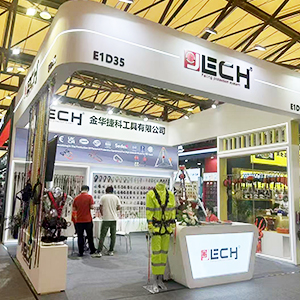
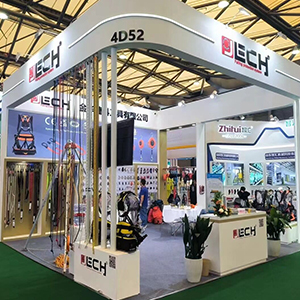
140th Canton FairPhase 1: October 15th–19th, 2026Add.: Canton Fair Complex, Guangzhou (No.382, Yuejiang Zhong Road, Guangzhou, China)JECH BOOTH NO.: 13.2D05-06 Jinhua JECH Tools Co., Ltd. is pleased to announce its participation in the 140th Canton Fair (Phase 1), taking place from October 15th to 19th, 2026, at the Canton Fair Complex, Guangzhou, China. We warmly invite customers and partners from around the world to visit us at Booth 13.2D05-06. Guided by the principles of integrity, safety, science, and efficiency, JECH has built a strong manufacturing base equipped with standardized production lines, multi-stage quality inspection systems, and a dedicated R&D team focused on fall protection technology. Our product range covers full body safety harnesses, safety lanyards, self-retracting fall arresters, guided-type fall arresters, climbing gear, tool lanyards, hardware accessories, and anchor point systems — all developed to meet CE, ANSI, UKCA, and CSA certification requirements for markets across Europe, North America, and beyond. Phase 1 of the Canton Fair brings together buyers from a wide range of industries, and JECH looks forward to presenting our latest product developments and manufacturing capabilities to visitors from this sector. This exhibition offers a valuable opportunity for us to connect with new and existing partners, exchange insights on market needs, and explore new areas of cooperation built on reliable quality and long-term trust. Welcome to visit JECH at Booth 13.2D05-06 — we look forward to seeing you in Guangzhou.
140th Canton FairPhase 3: October 31st–November 4th, 2026Add.: Canton Fair Complex, Guangzhou (No.382, Yuejiang Zhong Road, Guangzhou, China)JECH BOOTH NO.: 13.0C13 Two weeks after wrapping up Phase 1, Jinhua JECH Tools Co., Ltd. returns to the Canton Fair Complex for Phase 3, running from October 31st to November 4th, 2026, at Booth 13.0C13. As a National High-Tech Enterprise recognized in 2019, JECH has built its export business on a foundation of certification compliance, holding 87 CE certificates, 65 ANSI test reports, 27 UKCA certifications, and 6 CSA test reports across its safety harness, lanyard, fall arrester, and hardware accessory product lines. This documentation base allows the company to support buyers moving into markets with strict regulatory entry requirements without lengthy pre-qualification delays. Phase 3 draws a different mix of international buyers than earlier phases of the fair, and JECH is using this stop to focus specifically on OEM/ODM discussions — reviewing custom specifications, private labeling requirements, and packaging needs directly with visiting representatives at the booth. Buyers with upcoming certification deadlines or custom product requirements are welcome to bring their specifications to Booth 13.0C13 for a direct technical discussion with JECH during the fair.
Aluminum scaffold hooks are usually discussed after a crew begins working above ground rather than during equipment preparation. On many job sites, supervisors notice that the largest interruption is not climbing itself. It happens when a worker pauses to leave one anchorage point and move to the next. During routine work at height, these short pauses are repeated dozens of times in a single shift. Because of that, purchasing discussions around aluminum scaffold hooks increasingly include movement efficiency alongside traditional safety requirements. A second topic that appears regularly in project reviews is fall protection hardware, especially when different work locations require frequent connection changes. Movement Rhythm Changes Before Production Speed Workers rarely climb in one continuous motion. They stop. Reconnect. Check footing. Continue upward. This sequence may only take a few seconds, yet it repeats throughout the day. Site supervisors often watch these transitions carefully. If several workers slow down at the same location, the discussion usually turns to access layout rather than individual performance. During these observations, aluminum scaffold hooks become part of the conversation because connection speed directly affects working rhythm. Different Structures Create Different Habits A maintenance platform does not feel the same as a steel frame. Pipe racks require different body positions. Scaffolding changes hand placement. Ladders limit movement space. Operators naturally adjust their sequence according to the structure around them. A piece of fall protection hardware that feels comfortable in one environment may require different handling in another. Connection Points Influence Body Position During equipment trials, engineers sometimes record video instead of relying only on written notes. The review focuses on body movement. How far the arm reaches. Whether the worker twists before clipping. How often balance shifts from one foot to the other. These observations help explain how aluminum scaffold hooks influence movement without discussing strength ratings alone. Small Delays Become Large Over A Shift One pause is insignificant. Twenty pauses are noticeable. After several hours, repeated connection changes begin affecting the overall work rhythm. Crew leaders often compare different work teams by watching transition time rather than climbing speed. Production logs sometimes contain simple remarks: waiting before connection repeated repositioning limited access near beam edge Those notes frequently appear during evaluations involving aluminum scaffold hooks. Access Layout Is Reviewed Together Equipment is rarely reviewed by itself. Anchor locations. Working height. Platform spacing. Walking direction. These factors are discussed together because changing only one component rarely solves every movement issue. When reviewing fall protection hardware, engineers often redraw access routes before requesting different equipment. Observation Starts From Ground Level Before anyone climbs, supervisors usually watch preparation. Workers arrange lanyards differently. Some connect immediately. Others leave hooks hanging until reaching the anchor. These habits reveal how crews expect to move once work begins. An aluminum scaffold hooks evaluation often starts from these preparation routines instead of the climbing action. Weather Quietly Changes Working Rhythm Wind affects balance. Rain changes glove grip. Cold weather reduces hand flexibility. Although the equipment remains unchanged, movement patterns become different under changing site conditions. Field notes sometimes mention that aluminum scaffold hooks required slower operation during wet shifts, not because of equipment faults but because workers naturally became more cautious. Equipment Reviews Often Begin With Worker Feedback Formal inspection reports contain measurements. Daily conversations sound different. "This connection felt awkward." "I had to reach further than yesterday." "The second anchor was easier." These short comments are collected during toolbox meetings and later compared with production records. When selecting new fall protection hardware, purchasing teams often value these practical observations because they reflect continuous site use rather than laboratory testing. Repeated Routes Reveal Consistent Patterns Workers following the same climbing route for several days gradually develop similar movement patterns. Where they pause. Where they reconnect. Where they slow down. Those locations become predictable. Instead of measuring every movement, engineers compare repeated behavior across different crews. During these reviews, aluminum scaffold hooks are assessed as part of the complete access system rather than as isolated hardware.
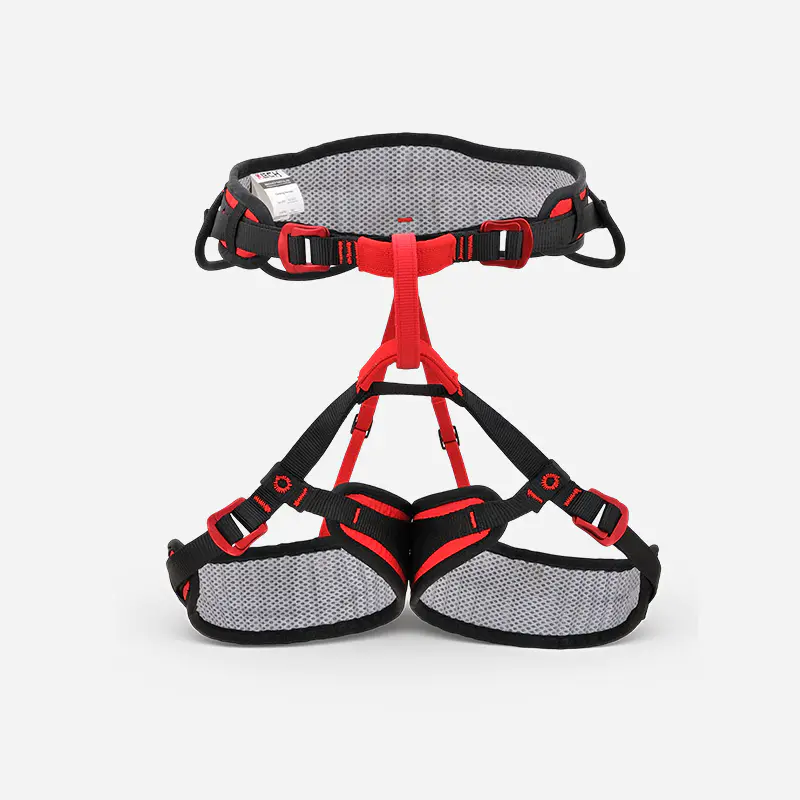
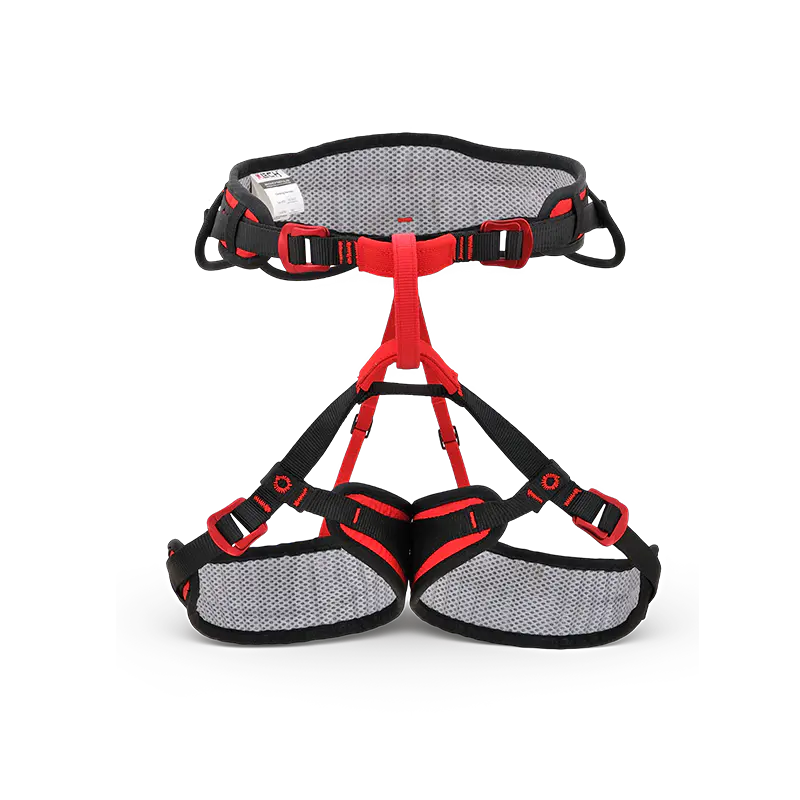
Sit harnesses rarely wear out in exactly the same way. During routine inspections, equipment managers often notice that two harnesses purchased on the same day can look surprisingly different after several months of use. The difference is not always related to manufacturing quality. In many cases, it reflects how the harness has been used, adjusted, and maintained throughout its working life. This observation has become a frequent topic in climbing centers, industrial rope access companies, and rescue training programs, where equipment inspections are performed on a regular schedule rather than only after visible damage appears. The Wear Pattern Often Tells A Story When experienced inspectors examine sit harnesses, they do not immediately search for broken stitching. Instead, they look for patterns. A polished area on one side of the waist belt, repeated abrasion around a gear loop, or uneven marks on one leg loop can all provide clues about daily working habits. For example, a technician who always carries tools on the same side may gradually create a different wear pattern from someone using the same harness in recreational climbing. The harness becomes a record of how it has been used rather than simply how old it is. Daily Friction Is Easy To Overlook Many people associate harness wear with dramatic falls. In reality, gradual friction often has a greater influence. Every time sit harnesses slide against a wall, rub against rough concrete, contact steel structures, or move beneath heavy clothing, the outer materials experience a small amount of abrasion. One individual movement causes almost no visible change. Thousands of similar movements over months of work create a very different picture. That is why inspectors often pay attention to areas that repeatedly contact the environment instead of focusing only on high-load attachment points. Dirt Can Hide Useful Information Dust and dirt are usually viewed as something that should simply be cleaned away. However, some experienced trainers clean sit harnesses carefully because accumulated dirt can hide early signs of wear. Once the surface is free from mud or construction dust, subtle changes become easier to identify. Stitching may appear slightly different. Fabric texture may become uneven. Areas that looked normal during everyday use suddenly deserve closer attention. Cleaning is therefore not only about appearance. It also improves the quality of routine inspections. Storage Habits Influence Service Life Inspection records sometimes reveal another interesting detail. Two climbers may use similar sit harnesses under comparable conditions, yet one harness ages much faster. The reason is occasionally found after work rather than during work. A harness left compressed beneath heavy equipment, exposed to unnecessary sunlight, or stored while still damp experiences different long-term conditions from one that is cleaned, dried, and stored correctly. The difference develops gradually and may only become obvious during later inspections. Experienced Users Watch Small Changes People with years of climbing or rope-access experience often notice details that newer users ignore. A waist belt that needs more adjustment than before. A gear loop beginning to lean differently. Fabric becoming smoother in one repeated contact area. These observations do not automatically mean sit harnesses should be removed from service. Instead, they encourage a closer inspection before assumptions are made. Many experienced equipment managers believe these small changes provide valuable information long before obvious damage appears. Inspection Is Becoming More Predictive Equipment inspections have traditionally focused on finding damage that already exists. Today, many organizations are beginning to treat inspections as an opportunity to predict future maintenance needs. Rather than waiting for significant wear, they compare inspection records over time and observe how sit harnesses change from month to month. This approach helps identify developing patterns instead of isolated defects. As climbing, rescue, and rope-access industries continue refining equipment management practices, the discussion is shifting from "Is this harness damaged?" to "What is this harness telling us about the way it is being used?" That subtle change in perspective is giving routine inspections a much greater role than simply checking equipment before the next climb.
Leading edge lifeline systems are designed for situations where ordinary fall protection faces additional challenges. Interestingly, many equipment inspectors have found that the earliest signs of wear often appear long before a fall ever occurs. On construction sites, steel structures, bridge projects, and roof installations, a leading edge lifeline may spend weeks or even months being pulled across edges, repositioned between anchor points, and exposed to changing work conditions. Daily movement, rather than a single accident, often becomes the source of equipment wear. This observation has encouraged many safety managers to place greater emphasis on routine inspections instead of waiting until equipment experiences a heavy load. Edge Contact Happens More Often Than People Expect Workers usually think about a fall only after it happens. Inspectors often think differently. Every time a leading edge lifeline changes direction over concrete, structural steel, or unfinished decking, small amounts of friction may develop where the line contacts the edge. Most of these contacts are harmless, but thousands of repeated movements can gradually change the surface condition of the lifeline. The process is slow enough that it may not attract attention during a normal workday. Over several months, however, those small changes become much easier to identify. The Rope Path Matters As Much As The Anchor When discussing fall protection, conversations frequently focus on anchor strength. Field supervisors are beginning to pay equal attention to another detail—the travel path. A leading edge lifeline may be connected to a suitable anchor while still passing across multiple contact points before reaching the worker. Every change in direction creates another location where abrasion, bending, or repeated rubbing can occur. For this reason, experienced inspectors rarely evaluate only the anchor location. They also observe how the lifeline travels throughout the entire work area. Surface Marks Can Indicate Working Habits During scheduled inspections, safety personnel sometimes notice that two identical leading edge lifeline systems have developed very different wear patterns. The reason is not always the equipment itself. One crew may reposition the lifeline frequently as work progresses. Another may repeatedly drag the same section across the same concrete edge throughout the project. The equipment quietly records these daily habits. To experienced inspectors, wear patterns often reveal how the system has been used, not simply how long it has been in service. Small Changes Are Easier To Detect During Cleaning Routine cleaning is usually viewed as housekeeping. Many equipment managers see another benefit. Cleaning a leading edge lifeline removes dust, concrete particles, and construction debris that may hide small signs of abrasion. Once the surface is clean, slight texture changes, localized discoloration, or unusual wear become easier to recognize. Several manufacturers also recommend regular inspection because contaminants can make visual assessment more difficult. A clean lifeline is not only easier to store. It is easier to evaluate. Inspection Is Becoming More Predictive Some companies are changing the way they inspect fall-protection equipment. Instead of asking whether a leading edge lifeline has already been damaged, inspectors compare today's condition with previous inspection records. They look for gradual changes rather than obvious defects. Has one contact area become smoother than before? Is the same section repeatedly touching structural edges? Has the rope path changed since the previous inspection? These questions help identify developing wear before it becomes a larger maintenance issue. Daily Movement Leaves Its Own Record Falls are rare events. Movement is continuous. That simple difference explains why many experienced safety professionals spend so much time observing equipment that has never actually arrested a fall. A leading edge lifeline experiences hundreds of small movements during an ordinary project. Over time, those movements leave a record that skilled inspectors can read through careful examination. As work-at-height practices continue to develop, the discussion is gradually shifting beyond emergency performance alone. More organizations are recognizing that understanding everyday wear can be just as valuable as preparing for the moment everyone hopes never happens.
lightweight full body harness equipment has become a frequent topic during discussions about work-at-height safety, but recent conversations are focusing on something beyond compliance. Safety supervisors are paying closer attention to how a harness influences worker fatigue over the course of an entire shift rather than during the few minutes of use. On many construction sites, communication towers, maintenance platforms, and industrial facilities, workers may wear lightweight full body harness equipment for six to ten hours a day. In these situations, comfort is no longer simply a preference. It becomes part of overall work efficiency and consistency. Fatigue Often Appears Before Workers Notice It When people think about fatigue, they usually imagine heavy lifting. Working at height creates a different kind of physical load. Walking across steel structures, climbing ladders, bending to install components, and repeatedly reaching above shoulder level all require continuous body movement. Even when a fall never occurs, the harness moves with the worker throughout the day. Because of this, some site supervisors have started comparing how lightweight full body harness equipment behaves during long maintenance tasks instead of evaluating it only during initial fitting sessions. The difference often becomes noticeable after several hours rather than several minutes. Small Movements Repeat Hundreds Of Times A worker climbing a telecommunications tower may step upward hundreds of times during a single shift. A maintenance technician inspecting structural steel may repeatedly kneel, stand, twist, and reach while carrying tools. None of these actions seems demanding by itself. Together, however, they create thousands of repeated body movements. During field observations, safety trainers have found that lightweight full body harness equipment should allow these repeated movements without constantly requiring readjustment. If workers spend excessive time repositioning shoulder straps or waist connections, small interruptions gradually reduce work rhythm. Balance Is Sometimes More Important Than Weight Many purchasing discussions focus only on total product weight. Experienced users often look at something different. They pay attention to how the weight is distributed across the shoulders, chest, back, and legs. A lightweight full body harness that feels balanced while climbing may produce a different working experience from one where pressure gradually concentrates on a limited area of the body. This is why experienced inspectors often ask workers how the harness feels after several hours instead of immediately after putting it on. The answer is frequently more meaningful. Seasonal Clothing Changes The Fit One practical detail is sometimes overlooked during equipment selection. Harness adjustment rarely remains identical throughout the year. Workers wearing light clothing during warm weather may adjust lightweight full body harness equipment differently from those wearing insulated jackets during winter maintenance. Several safety trainers have noted that seasonal clothing can influence strap position, body movement, and overall comfort. For this reason, many companies include fitting checks whenever work clothing changes significantly. The harness itself has not changed. The working conditions have. Safety Inspections Now Include Worker Feedback Routine equipment inspections traditionally concentrated on stitching, hardware, and webbing condition. Many organizations now collect another type of information. They ask workers where pressure develops during the day, whether adjustment points remain stable, and whether movement feels consistent after hours of continuous activity. This feedback helps safety managers understand how lightweight full body harness equipment performs in real working environments instead of relying only on laboratory evaluations. It also helps identify small fitting issues before they influence productivity or comfort. A Harness Supports More Than Fall Protection A harness exists primarily to protect workers during a fall. Yet in everyday operations, working hours pass without any fall event occurring. During that time, lightweight full body harness equipment becomes part of every climb, every inspection, and every movement across the job site. As more companies analyse long-term worker performance rather than isolated safety incidents, attention is gradually shifting toward how equipment interacts with the human body throughout an entire shift. That trend reflects a broader change in work-at-height management. Modern safety discussions are no longer limited to meeting regulations—they increasingly consider how equipment can support consistent movement, reduce unnecessary fatigue, and help workers remain comfortable while carrying out demanding tasks day after day.
Sit harnesses are often discussed when people compare climbing equipment, but instructors have recently been paying attention to something different. During routine training sessions, many have noticed that a harness sometimes reveals mistakes before the rope system does. A beginner may believe the rope setup is correct because everything appears secure. However, once sit harnesses are weighted, small problems become much easier to identify. Body position changes, the tie-in point shifts, or the climber feels unexpected pressure around the waist or legs. These observations have led many training centers to spend more time evaluating movement rather than equipment alone. A Comfortable Fit Can Change Once The Rope Is Loaded Trying on a harness in a gear shop is very different from hanging on a rope. Many users judge sit harnesses while standing upright for only a few minutes. During climbing or rescue practice, the entire load transfers through the harness, and the contact points begin working differently. Experienced trainers often ask students to remain suspended for several minutes before making any adjustments. Pressure around the leg loops, waist belt position, and overall balance become much clearer after the harness is carrying body weight instead of simply resting around the waist. Because of this, a harness that feels acceptable on the ground may require further adjustment once real loading begins. Rope Direction Often Changes Body Position One detail that receives increasing attention is rope direction. Whether climbing indoors, working on a tower, or performing rope access, the rope rarely stays perfectly vertical throughout the task. Small changes in anchor position can gradually influence how the climber's body aligns inside sit harnesses. Instructors often watch the hips instead of the hands. If the climber repeatedly twists toward one side or struggles to maintain balance during suspension, the cause may not be poor climbing technique. It can simply indicate that the harness has not been adjusted evenly before leaving the ground. This type of observation is becoming more common during technical training because it helps identify issues before they become habits. Small Adjustment Errors Become Larger Over Time Many climbers tighten their harness at the beginning of the day and rarely think about it again. Yet clothing layers change, equipment is added, and movement gradually affects the original adjustment. During long working periods, sit harnesses may settle slightly as the wearer bends, climbs, kneels, or carries tools. The change is usually small. However, after several hours, a difference of only a few centimeters can alter how the load is distributed across the waist and leg loops. For experienced users, checking harness adjustment during breaks has become as routine as checking carabiners or rope connections. Trainers Are Watching Movement Instead Of Equipment Several climbing instructors have commented that modern training focuses less on identifying defective equipment and more on understanding how people move while using it. A climber may repeatedly lean backward too early during descent. Another may instinctively sit unevenly after weighting the rope. These are not necessarily equipment failures. Instead, sit harnesses make body mechanics easier to observe because every movement transfers directly through the harness. Rather than immediately replacing equipment, instructors often analyse why the movement occurred in the place. That approach has become increasingly common in both recreational climbing courses and professional rope-access training. Tiny Details Often Prevent Bigger Problems When experienced technicians inspect climbing systems, they rarely concentrate on a single component. Instead, they look for small signs that something is changing. The waist belt gradually riding upward during repeated movement. Leg loops carrying noticeably different amounts of weight. The tie-in area no longer remaining centered after several climbs. None of these observations automatically indicate that sit harnesses are unsuitable. Instead, they provide useful information about adjustment, posture, or rope technique before discomfort develops into a larger problem. Equipment Often Becomes A Training Tool For many climbers, a harness is simply part of the equipment list. For instructors, it is also a source of information. The way sit harnesses support the body can reveal how efficiently a climber transfers weight, manages balance, and responds to changing rope angles. Those details are difficult to notice while standing on the ground but become obvious once the rope is fully loaded. This shift in attention reflects a broader trend within climbing and rope-access training. Rather than evaluating equipment in isolation, trainers increasingly study how equipment and human movement work together. In that process, sit harnesses do more than provide attachment points—they help reveal techniques that can be refined long before they affect safety or efficiency.
A fall protection clamp is used in elevated work to create a temporary fixing point. It is usually attached to steel beams, scaffolding, or similar structures when workers need somewhere to connect safety lines or tool tethers. On many sites, a fall protection clamp is not treated as a fixed installation. It is more of a working accessory that gets added when needed and removed after the task is done. How the clamp works in daily operation The clamp grips onto a structural edge by tightening a screw or lever. Once it is in place, it stays fixed and can be used as an anchor point for lanyards or tether lines. In real use, workers usually adjust it directly on site rather than preparing it in advance. The position depends on where the work is happening, so it may be moved several times during a shift. A fall protection clamp does not interact with tools directly. It simply holds the connection point so the tether system can function. Where it is commonly applied Construction sites use these clamps often, especially when working on steel frames or elevated platforms. Tools are carried at height, and having a temporary anchor point makes handling easier. Maintenance work also uses them when permanent anchor points are not available. In those cases, the clamp is attached to whatever structure is nearby and then removed later. In electrical and telecom work, a fall protection clamp is sometimes used on ladders or narrow platforms where space is limited and tools need to stay connected while moving. Warehouse and inspection work can also involve clamp setups when reaching overhead structures. Design behavior and practical handling Most clamps are metal and shaped to fit beams or flat edges. The surface that touches the structure is usually designed to hold steady once tightened. The tightening part is simple. It is either a screw or a lever. After adjustment, the clamp stays in position without much movement. In daily use, a fall protection clamp often sits as part of a larger setup with lanyards or tool lines attached to it. It is not carrying the tool itself, only the connection point. Some models feel heavier and more rigid, while others are smaller and easier to move between locations. Comparison with fixed anchor systems Fixed anchors stay in one place because they are installed into the structure. They are common in permanent work areas where the layout does not change. Clamp systems work differently. A fall protection clamp can be attached, removed, and reused in different spots. That makes it more suitable for temporary work or changing job sites. On construction sites, clamps are often used because the working area shifts. In fixed facilities, permanent anchors are more common since there is no need to reposition them. The main difference is not performance but how often the setup needs to move. Selection considerations in practical use Choosing a clamp usually comes down to size compatibility and working conditions. It needs to fit the beam or edge where it will be used, and it has to match the load expected in that task. Some environments are rougher, so corrosion resistance becomes more relevant. Others focus more on quick setup because workers change positions often. In real projects, a fall protection clamp is often selected simply because it fits the structure and can be reused across different points without installation work.
September 14-16, 2026 ADD.: Indiana Convention Center, Indianapolis, IN, USA JECH BOOTH NO.: 4719 JECH will participate in the NSC Safety Congress & Expo 2026, one of North America's occupational safety and health exhibitions, showcasing fall protection equipment and workplace safety solutions. JECH is pleased to announce its participation in the NSC Safety Congress & Expo 2026, which will be held from September 14 to 16, 2026, at the Indiana Convention Center in Indianapolis, Indiana, USA. As one of North America's recognized occupational safety and health events, the NSC Safety Congress & Expo brings together safety professionals, distributors, manufacturers, and industry leaders from around the world. The exhibition provides a valuable platform for exchanging industry insights, exploring new technologies, and building business relationships within the workplace safety sector. As a professional manufacturer of personal fall protection equipment, JECH specializes in safety harnesses, safety belts, energy-absorbing lanyards, fall arresters, lifelines, climbing equipment, and related PPE products. Our products are widely used in construction, industrial maintenance, energy, telecommunications, and other work-at-height applications. This product focus aligns with JECH's existing fall-protection and PPE portfolio. At Booth 4719, visitors will have the opportunity to learn more about our fall protection solutions, discuss project requirements with our team, and explore cooperation opportunities for global distribution and OEM manufacturing. The NSC Safety Congress & Expo offers an outstanding opportunity for JECH to strengthen connections with industry professionals and gain a deeper understanding of evolving workplace safety requirements. We look forward to meeting customers, partners, and industry peers in Indianapolis. Welcome to visit JECH at Booth 4719.
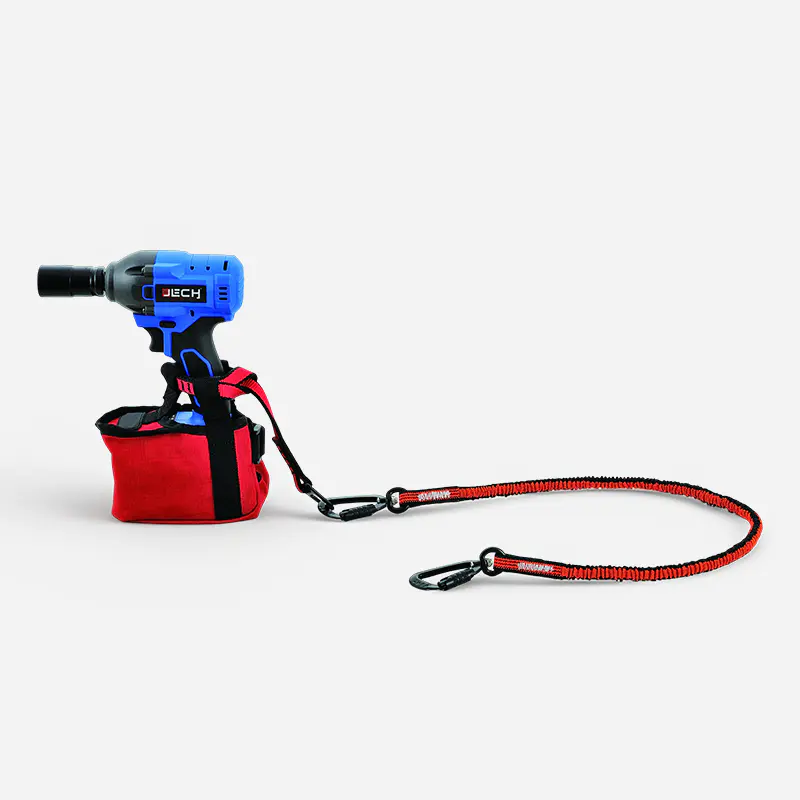
A retractable tool leash is used to keep tools attached to the user while still allowing free movement during work. It usually comes with a spring inside the housing, so the line can extend when a tool is pulled and then go back on its own when released. In many job sites, this kind of setup is not treated as a complex device, but more like a practical add-on. Workers clip it to belts, harness points, or fixed positions depending on how they work on that day. The retractable tool leash is often chosen when tools need to stay close but not constantly in the way. How it actually works in daily use Inside the body, there is a simple spring-loaded spool. When the tool moves away, the cord comes out smoothly. When the tool is let go, it slowly pulls back without much effort from the user. Some versions feel tighter, some feel looser depending on load rating and internal spring setup. In practice, people usually notice this only after using it for a while, not at the beginning. Different attachment styles are used as well, like clips or screw-type connectors. The choice usually depends on how heavy the tool is and where it is being used. For retractable tool leash, weight handling is one of the main points people check before putting it into daily operation. Where it is commonly used You will see this kind of tool in construction sites quite often, especially when people are working above ground level. Tools like pliers, wrenches, or small hammers are usually connected so they do not fall accidentally. Electricians also use it when working on ladders or narrow spaces where dropping a tool is not just inconvenient but risky. In workshop environments, it helps keep things a bit more organized. Tools do not get misplaced as easily, especially when multiple people are working in the same area. The retractable tool leash is also used in maintenance work where people move between stations and need to carry tools without putting them down every time. Difference compared with normal lanyards Regular lanyards stay at one fixed length, so tools either hang down or stay too tight depending on the setup. That can sometimes get in the way during movement. Retractable versions behave differently. The cord adjusts itself during use, so the tool moves with the worker more naturally. In real use, this difference is not always obvious on paper, but it becomes noticeable when someone is working for long hours. A retractable tool leash usually feels more flexible in tight working areas, while fixed tethers are simpler but less adaptive. Choosing based on real working needs Selection is usually not complicated. Most buyers look at three things: how heavy the tool is, how much movement is needed, and how often it will be used. Some environments prefer shorter retraction ranges, especially when people work close to equipment. Others prefer longer reach when working at height or across wider spaces. In bulk use cases, keeping consistency between units matters more than small design differences, since workers often switch between tools during the day. The retractable tool leash is generally picked when both movement and safety need to stay balanced without adding extra handling steps.
Electrical maintenance crews rarely expect great working conditions. A repair might happen beside a wet dock, inside a dusty workshop, or outdoors during changing weather. In those situations, ordinary adhesive tape often becomes unreliable after only a short period of use. Moisture, vibration, and heat gradually weaken the adhesive layer, especially when cables or connectors move frequently during operation. Because of this, many technicians have started using silicone self healing tape as part of their regular maintenance supplies. Unlike standard electrical tape, silicone-based tape does not depend on glue. The material stretches during application and bonds to itself once wrapped under tension. After a short time, the layers form a single protective covering that stays flexible while helping shield cables, connectors, and exposed surfaces from outside conditions. The tape is now commonly seen in electrical maintenance, marine repair, utility work, and industrial servicing where quick temporary protection is often necessary. What Makes Silicone Self Healing Tape Different? The biggest difference is the material itself. Traditional tapes rely on adhesive contact with the surface underneath, while silicone self healing tape creates a seal by fusing to its own layers. This changes how the tape behaves in real working environments. For example, workers can remove it without dealing with heavy adhesive residue. The tape also adapts more easily to uneven surfaces or awkward cable layouts that would normally cause standard tape to loosen over time. Several practical features have made the material increasingly common in field repair work. Wraps tightly around irregular connectors and fittings. Maintains flexibility after exposure to outdoor conditions. Helps reduce moisture contact around exposed wiring. Creates temporary insulation without additional tools. Handles vibration better than many adhesive tapes. Another reason technicians prefer silicone self healing tape is its ability to stay stable during temperature changes. Some adhesive products become brittle in cold conditions or soften during heat exposure, but silicone materials generally maintain more consistent flexibility. Where Is It Commonly Used? Electrical repair remains one of the common applications. Maintenance workers often use silicone self healing tape around damaged insulation, temporary cable splices, and exposed wiring during emergency repair situations. In many cases, the goal is not to create a permanent repair immediately, but to protect the equipment long enough for scheduled maintenance. Marine environments create another major use case. Equipment on boats, docks, and coastal installations is regularly exposed to humidity and salt air. Standard adhesive tape may peel away quickly in those conditions. Silicone materials generally hold up better, which is why marine technicians frequently keep self-fusing tape available in repair kits. Industrial maintenance teams also rely on the material during routine inspections. Portable pumps, hose connections, outdoor control boxes, and tethered tools may all require temporary wrapping or protective sealing at different stages of operation. Workers often choose silicone self healing tape because it can be applied quickly without waiting for adhesives, curing compounds, or heating equipment. Utility and telecom work have also contributed to growing demand. Outdoor cable systems experience constant environmental exposure, and crews need products that are portable, flexible, and easy to carry between job sites. What Should Buyers Pay Attention To? Not every silicone tape performs the same way. Material thickness, stretch level, and temperature tolerance can vary noticeably between products. A thinner tape may work better around compact wiring or narrow connectors, while thicker materials may offer more physical protection in rough environments. Weather exposure also matters. Outdoor applications often require UV resistance and reliable performance during heat, cold, or rain. Industrial users may additionally look for resistance to abrasion, chemicals, or oil exposure depending on the environment. Some buyers focus too heavily on technical specifications alone. In practice, many maintenance teams prefer testing silicone self healing tape directly under real working conditions before committing to larger orders. Installation surfaces, weather conditions, and movement around the repair area can all affect long-term performance. Why Proper Application Still Matters? Even durable tape can perform poorly if installed carelessly. Most technicians recommend stretching the tape evenly and overlapping each layer consistently during wrapping. Gaps between layers may allow moisture or debris to reach the protected area. Surface condition can also influence results. Dirt, oil, or standing water may interfere with how tightly the layers fuse together. Before applying silicone self healing tape, workers usually clean the repair area as much as possible to improve contact. Storage is another overlooked factor. Excessive heat and direct sunlight over long periods may gradually affect flexibility before the tape is even used. Keeping the material stored correctly helps maintain reliable performance during future repairs. As maintenance work becomes more mobile and fast-paced, flexible repair materials continue gaining attention across multiple industries. For technicians handling cables, tools, connectors, or temporary insulation work, silicone self healing tape offers a practical balance between speed, protection, and ease of use in everyday field conditions.