
When a harness, lanyard, or coil of rope arrives at a distribution warehouse, the packaging often gets less scrutiny than the product inside it — until a batch shows up with torn seams or crushed corners. An oxford cloth packaging bag is one of several material options a factory can offer for shipping and retail packaging, and knowing what separates it from color boxes, PVC tarpaulin, or nonwoven fabric helps buyers pick the right option for how the product will actually travel and get handled. Buyers who default to whatever packaging a factory ships in bulk often overlook how much an oxford cloth packaging bag can be adjusted to fit a specific product category.
Oxford cloth gets its name from a basket-weave pattern originally developed for shirting fabric, later adapted into a heavier, more abrasion-resistant textile for bags and covers. An oxford cloth packaging bag is typically woven from polyester or nylon yarn in a plain or basket weave, then coated or laminated on the inside to add water resistance. The weave itself is what gives the fabric its texture and strength — tighter weaves resist snagging and pulling, which matters when bags are stacked, strapped, or slid across warehouse shelving during handling.
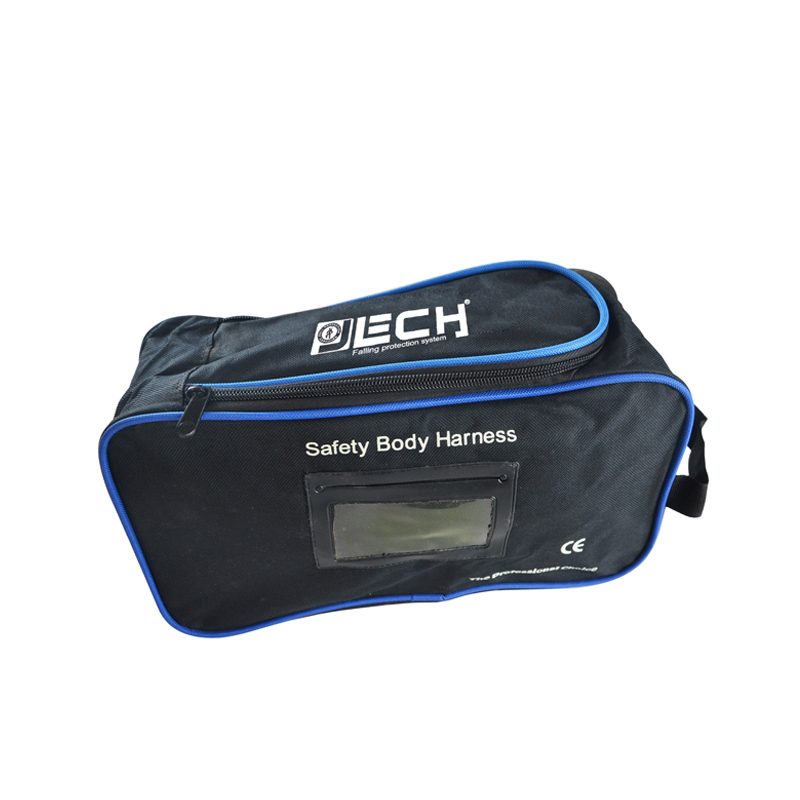
Fabric weight is measured in denier rating, a term buyers see on spec sheets without always knowing what it changes in practice. A 600D oxford cloth packaging bag, for example, uses yarn heavy enough to resist puncture from sharp product edges like buckle hardware or carabiner gates, while remaining flexible enough to fold flat for storage between shipments. Lighter deniers reduce material cost but also reduce tear resistance, so buyers packaging heavier or hardware-dense products such as safety harnesses or tool kits generally specify a heavier denier than they would for soft goods. A factory able to offer both 300D and 600D fabric on request gives buyers room to balance cost against expected handling conditions for each product line.
Closure type affects both protection and retail presentation. A zipper closure on an oxford cloth packaging bag keeps contents fully enclosed during transit and allows the bag itself to double as reusable storage after the product reaches the end user, which some buyers use as a value-add on retail packaging. Drawstring or Velcro closures cost less to produce but leave a small gap where dust or moisture can enter, which matters more for products stored outdoors or in humid warehouse conditions than for items sold and used quickly.
|
Material |
Oxford Cloth |
Nonwoven Fabric |
PVC Tarpaulin |
|
Abrasion resistance |
High, tight woven structure |
Moderate, fibers can pill or tear |
Very high, coated surface |
|
Water resistance |
Good with coating |
Low unless laminated |
Excellent, fully waterproof |
|
Typical use |
Reusable tool or gear bags |
Low-cost promotional bags |
Heavy-duty outdoor equipment covers |
|
Flexibility for folding |
High |
High |
Lower, stiffer material |
|
Relative production cost |
Mid-range |
Lowest |
Higher than oxford cloth |
Packaging bags for personal protective equipment are rarely one-size items, since a coiled lifeline, a full-body harness, and a set of tool tethers occupy very different volumes. Producing an oxford cloth packaging bag across multiple standardized sizes lets a single fabric and closure specification cover a wider product range without redesigning packaging for every SKU. Buyers consolidating packaging across several product lines can reduce tooling and setup costs by working with a factory that already produces the bag in more than one size on the same base pattern, adjusting only dimensions and color per order.
Color and branding are usually the last specification buyers think about, but they affect both retail shelf presence and how easily a distributor identifies contents without opening every bag. Custom branding on an oxford cloth packaging bag produced in a factory's base color, such as black, can typically be dyed or printed to match a buyer's brand requirements at order volume, with logo placement added through screen printing or heat transfer depending on the artwork. Buyers working across multiple SKUs often standardize on one base fabric and closure style, then vary only color and branding per client or product line, which keeps unit cost predictable while still giving each product a distinct retail identity. For buyers bundling packaging with the product order itself, confirming color and branding reduce times upfront avoids delays that would otherwise hold up an entire shipment over a single unfinished component.
Jinhua JECH Tools Co., Ltd. is a manufacturer specializing in the production of high-building safety harness, safety belts, energy absorber lanyard belts, fall arrester and lifelines, climbing supplies and other personal protection equipment.
View All Products
One-stop work at height solutions
Stay updated with pur latest news. We promise.
 English
 Español
 Deutsch
 عربى