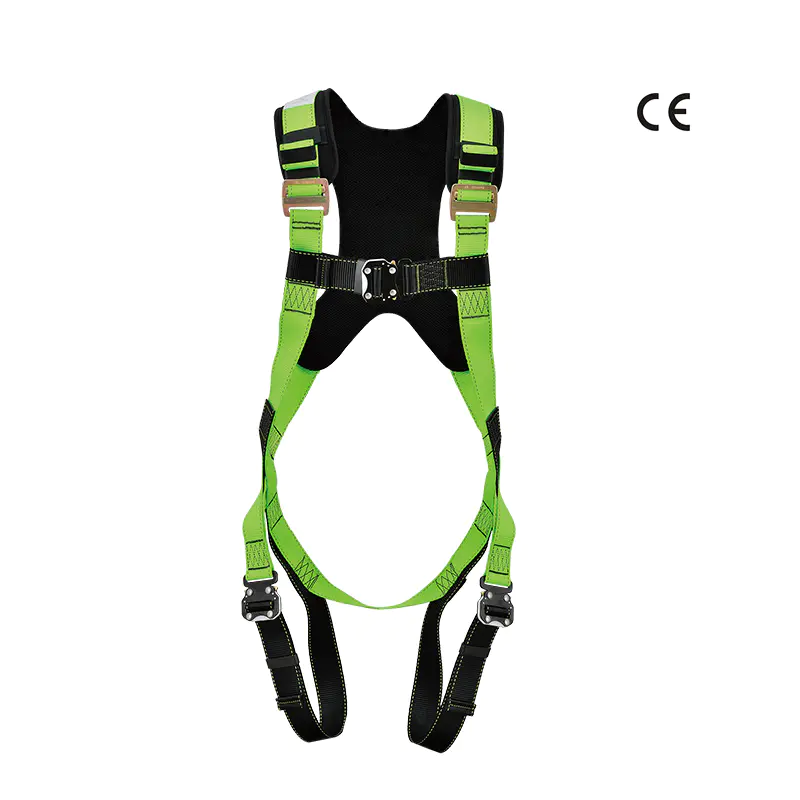


A worker who falls while wearing an improperly designed harness can suffer serious internal injury even if the fall itself is arrested successfully, because the harness failed to spread impact force across the body the way it was supposed to. An ANSI Full Body Safety Harness is engineered specifically around this load distribution problem, and buyers sourcing this category should understand what the strap configuration is actually doing before comparing suppliers on price alone.
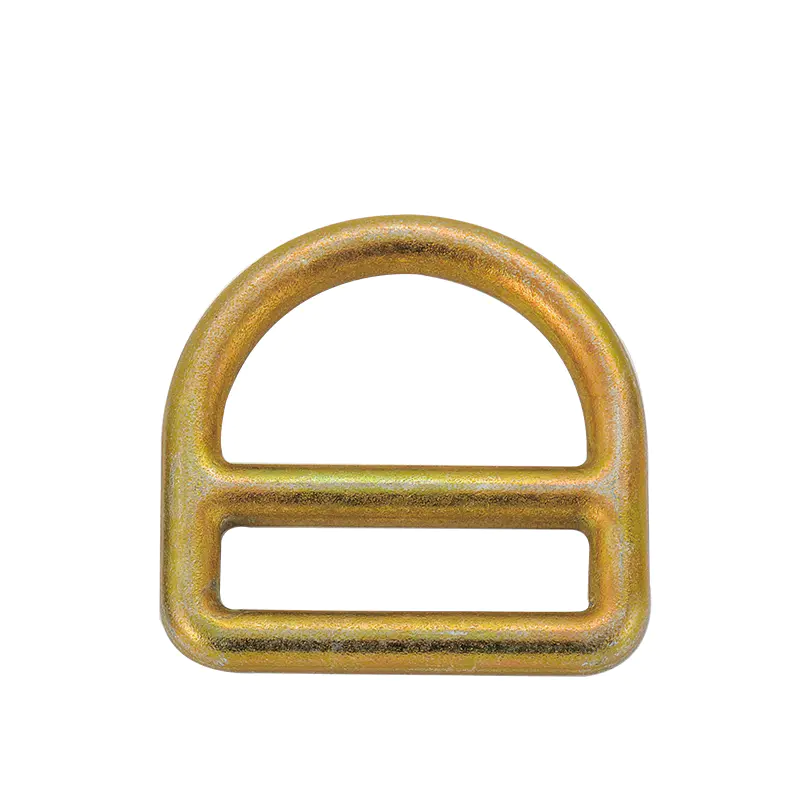
An ANSI Full Body Safety Harness routes webbing across the shoulders, around the waist, and between the legs, converging at a dorsal attachment point on the back, and this specific geometry exists to spread arrest force across the strongest parts of the human skeletal structure rather than concentrating it at a single point. A dorsal D-ring harness design positions the attachment point between the shoulder blades so that a fall pulls the body into an upright, controlled orientation rather than allowing it to tip forward or backward in a way that increases injury risk. Buyers evaluating an ANSI Full Body Safety Harness should confirm strap width and stitching pattern specifications, since narrower webbing or inconsistent stitch density can concentrate force differently than the tested configuration a certification was based on.

The ANSI designation on a fall arrest harness indicates the product has been independently tested against specific requirements set by the American National Standards Institute, covering strength, strap configuration, and hardware performance under simulated fall conditions. Buyers should request documentation showing which specific ANSI standard an ANSI Full Body Safety Harness was tested against, such as Z359.11, rather than accepting a general "ANSI compliant" claim, since the standard number determines exactly which performance criteria the product was evaluated on.
|
Configuration |
Attachment Points |
Typical Application |
|
Basic Dorsal Harness |
Single rear D-ring |
General fall arrest, vertical access |
|
Multi-Point Harness |
Dorsal plus hip or chest rings |
Rescue, positioning, confined space entry |
|
Harness With Integrated Lanyard |
Dorsal ring plus attached lanyard |
Simplified one-piece deployment kits |
Buyers supplying tower climbing or rope access customers typically request multi-point configurations, while general construction distributors often stock basic dorsal harnesses as the higher-volume standard item.
Webbing on an ANSI Full Body Safety Harness is typically woven from polyester or nylon, and the choice between these materials affects how the harness performs under UV exposure and repeated loading over its service life. A polyester webbing harness resists UV degradation better than nylon in outdoor applications, which matters for buyers supplying construction and tower climbing customers who leave harnesses exposed to sun for extended periods between uses. Buyers should confirm which material a specific SKU uses, since webbing that looks identical in a product photo can differ meaningfully in long-term strength retention once field exposure begins.
Manufacturing an ANSI Full Body Safety Harness at export volume requires batch-level testing beyond the initial certification process, since stitching consistency and hardware attachment strength can vary if quality control isn't applied throughout a production run rather than only at the design validation stage. Buyers should request documentation showing how many key tests a factory applies to its production process and confirm that testing covers the specific batch under quote rather than relying solely on a certification obtained for an earlier product version.
Buyers building a private-label PPE line should confirm whether a supplier's ANSI Full Body Safety Harness program allows custom webbing color, sizing range, and packaging configuration without requiring a new certification cycle, since certification testing tied to a specific design can be costly to repeat unnecessarily. Manufacturers running dedicated production across multiple harness configurations can typically accommodate mixed-SKU container orders, letting distributors combine harnesses, lanyards, and hardware accessories within a single shipment rather than committing full container volume to one product category.
Jinhua JECH Tools Co., Ltd. is a manufacturer specializing in the production of high-building safety harness, safety belts, energy absorber lanyard belts, fall arrester and lifelines, climbing supplies and other personal protection equipment.
View All Products
One-stop work at height solutions
Stay updated with pur latest news. We promise.
 English
 Español
 Deutsch
 عربى